
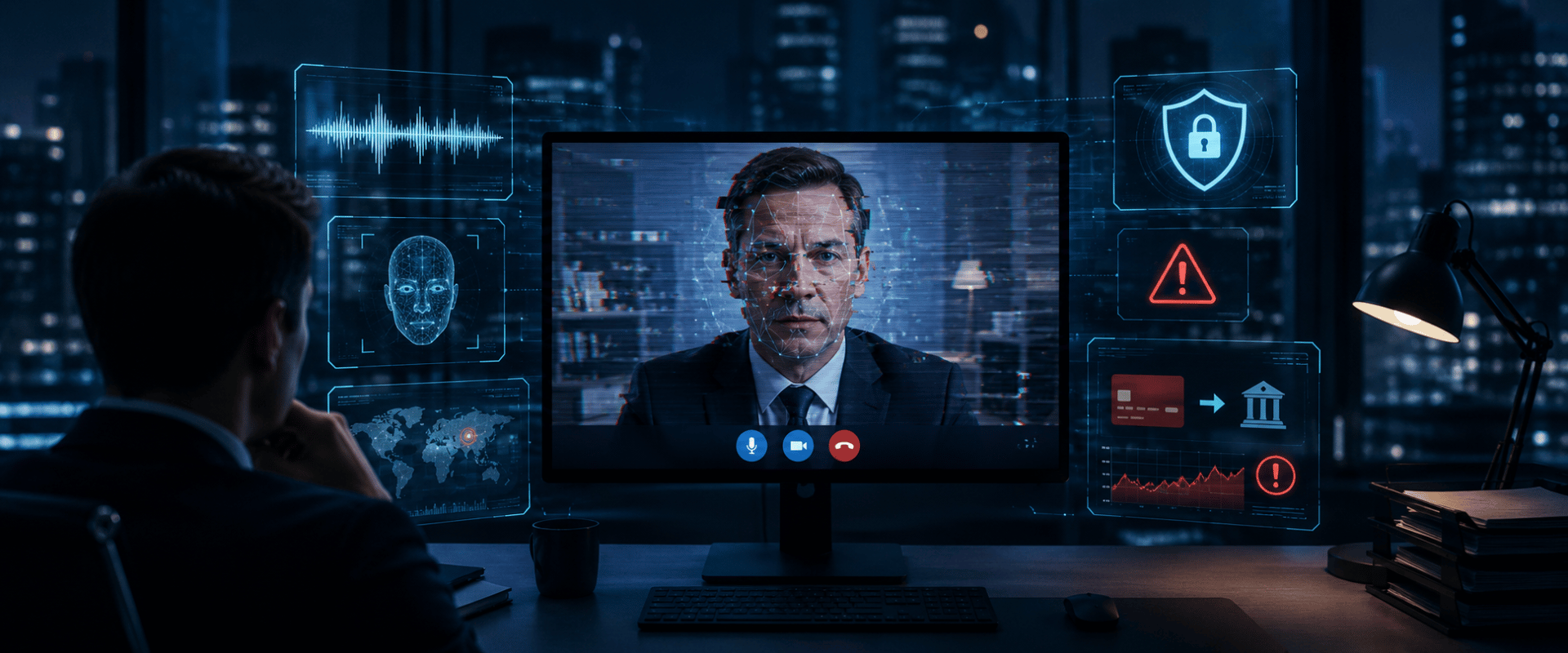
Deepfake Fraud Is Changing Cybercrime: Is Your Business Prepared?
How AI-powered scams fool smart people and what your team can do about it
Imagine getting a call from your boss. The voice is exactly right, down to the accent and pauses between words. They need an urgent payment sent before the end of the day. You recognize that voice anywhere, so you send it. The problem is your boss never called. You just handed money to a criminal using a cloned voice.
This is deepfake fraud, changing how cybercrime works. Instead of clumsy emails full of typos, attackers use artificial intelligence to fake voices, faces, and video calls that look and sound real. Small and medium businesses are prime targets because they rarely expect such convincing attacks.
Continue reading to learn just how convincing deepfake fraud can be and how to protect your business.
What a deepfake actually is
A deepfake is fake audio, video, or imagery created with AI to imitate a real person. The technology once required a Hollywood budget. Now it is cheap and easy to find, so almost anyone can build a convincing fake from a short voice sample or a few photos.
For businesses, the danger usually shows up in three ways:
- Voice cloning: A criminal copies an executive’s voice from a podcast, webinar, or voicemail and uses it to request transfers or passwords.
- Fake video calls: Attackers impersonate leaders on a video meeting to approve payments or pressure staff into acting fast.
- Forged documents: AI generates fake invoices, IDs, or contracts to slip past approval steps.
Learn more:
What Is Layered Security and Why Does Your Business Need It
A real example that cost millions
In early 2024, a finance worker at a multinational company was tricked into paying $25 million. The scam worked because the employee joined a video call that appeared to include the company’s chief financial officer and other familiar colleagues. Every person on that call was a deepfake. The request felt normal because the faces and voices belonged to people the employee trusted.
These are not rare, isolated events. According to the voice technology company Resemble AI, deepfake-related losses topped $ 200 million in the first quarter of 2025 alone. [1]
Related resource:
How to Achieve the Best Cybersecurity for Small Businesses
How to protect your business
You do not need expensive tools to reduce your risk. A few habits make a real difference.
- Verify before you pay: Confirm any urgent money or data request through a second channel, like a direct call to a known number.
- Set a payment rule: Require a second person to approve large or unusual transfers.
- Train your team: Teach staff that a familiar voice or face is no longer proof of identity.
- Turn on multi-factor authentication: Add a second layer of login security so stolen credentials are not enough.
Are you looking for a managed IT partner for your business?
Deepfake fraud is only going to get more convincing, and the businesses that prepare now are the ones that stay protected. With over 15 years of experience, InterNetwork IT helps small and medium businesses across Orlando and beyond build layered defenses that catch modern threats before they cause damage.
To learn more about how we can help you improve your cybersecurity and protect your business, please visit our IT Cybersecurity Services page.
Ready to get started?
Contact us today to learn more!
1: Fordham Now | Deepfake Cybercrime is Soaring, Experts Say